Effective Mobility Routines to Prevent Injury
10 September 2026
Most people think of injury prevention as a matter of strength or flexibility. They stretch their hamstrings, do some core work, and hope for the best. But the missing piece in most routines is mobility, and it is not the same as stretching. Mobility is the ability to move a joint through its full range of motion with control, while flexibility is simply the length of a muscle. You can be incredibly flexible and still lack mobility because you do not have the strength or coordination to control that range. That distinction matters more than most people realize, and it is the foundation of any effective injury prevention strategy.
The human body is a system of levers, pulleys, and shock absorbers. When one joint loses its ability to move properly, another joint compensates. The knee takes over for a stiff ankle. The lower back takes over for tight hips. The shoulder blade compensates for a restricted thoracic spine. Over time, these compensations create repetitive strain in tissues that were never designed to handle that load. The result is not a sudden injury from a single event, but a gradual breakdown that finally announces itself as pain. Mobility work is the antidote because it restores proper joint function so that the right tissues handle the right forces.

Why Mobility Fails in Most Training Programs
The biggest mistake people make is treating mobility as an afterthought. They do a few leg swings before a run or a quick hip flexor stretch after sitting for eight hours, and they call it done. That approach rarely produces meaningful change because mobility is not a static trait. It is a skill that requires consistent, deliberate practice under load.Another common error is confusing passive stretching with active mobility. Holding a pigeon pose for two minutes might feel good, but it does little to teach your hip joint how to move through its range while your muscles are engaged. Active mobility requires your muscles to work at the end range of motion. That is what builds the strength and neuromuscular control needed to keep your joints safe during dynamic activities.
There is also a misconception that mobility work is only for older adults or people recovering from injury. In reality, the younger and more active you are, the more you need it. High-intensity training, running, and sports create repetitive patterns that tighten certain tissues and weaken others. Without a counterbalance, those imbalances become predictable injuries. A twenty-five-year-old runner with poor ankle mobility is just as likely to develop patellar tendinopathy as a sedentary fifty-year-old is to develop lower back pain.
The Difference Between Mobilizing and Stretching
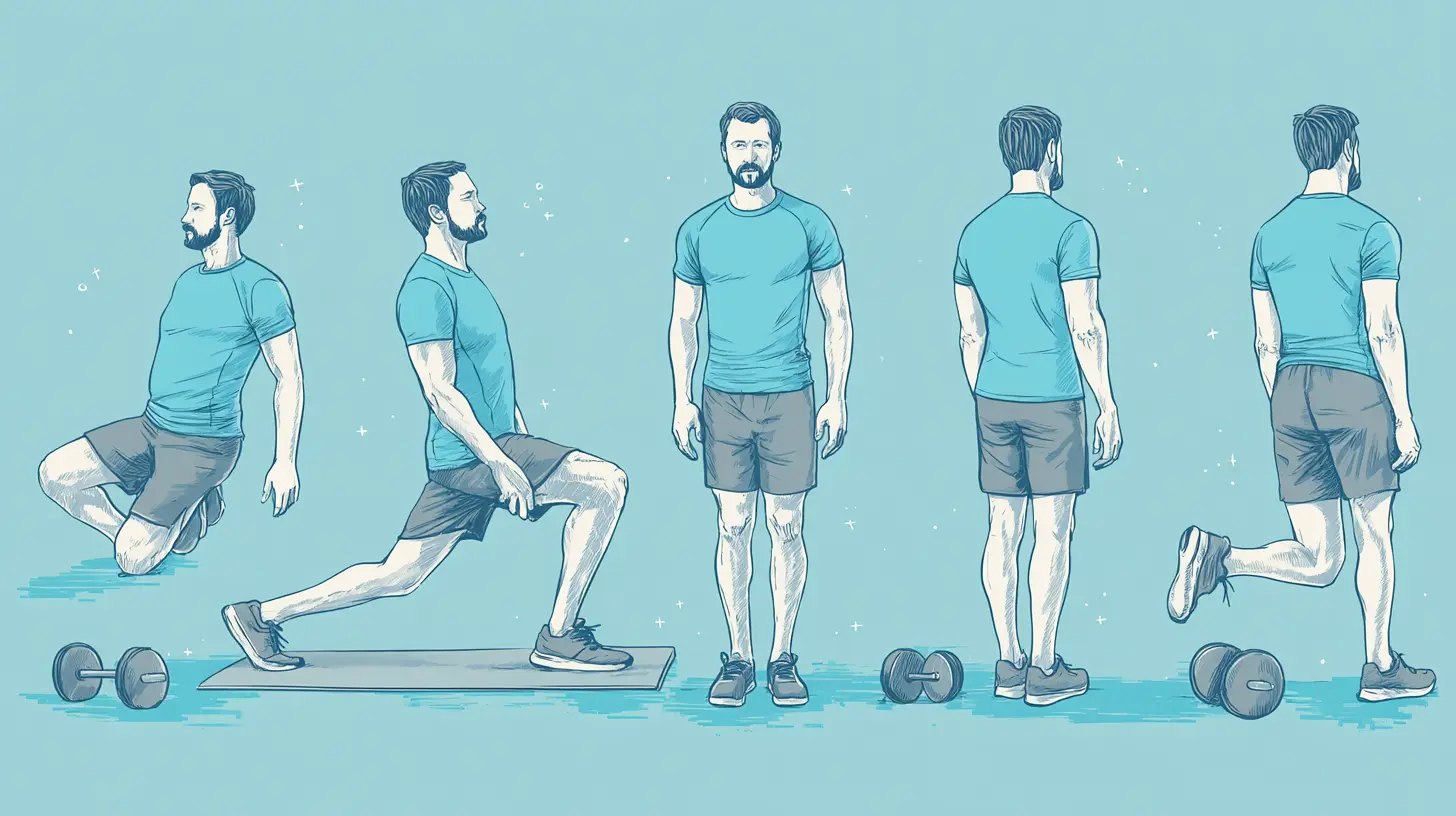
Stretching targets muscle length. If your hamstring is short, you stretch it and it becomes longer. That is useful in some cases, but it does not address the joint capsule, the fascia, or the nervous system's willingness to allow movement in a certain direction. Mobility work addresses all of those elements.Consider the shoulder. Many people have tight pectoral muscles and weak upper back muscles. Stretching the chest feels good, but it does not teach the shoulder blade to move correctly against the ribcage. A mobility routine for the shoulder should include not just chest opening, but also controlled rotations of the shoulder blade, wall slides that force the scapula to move through its full arc, and loaded carries that challenge stability at end range.
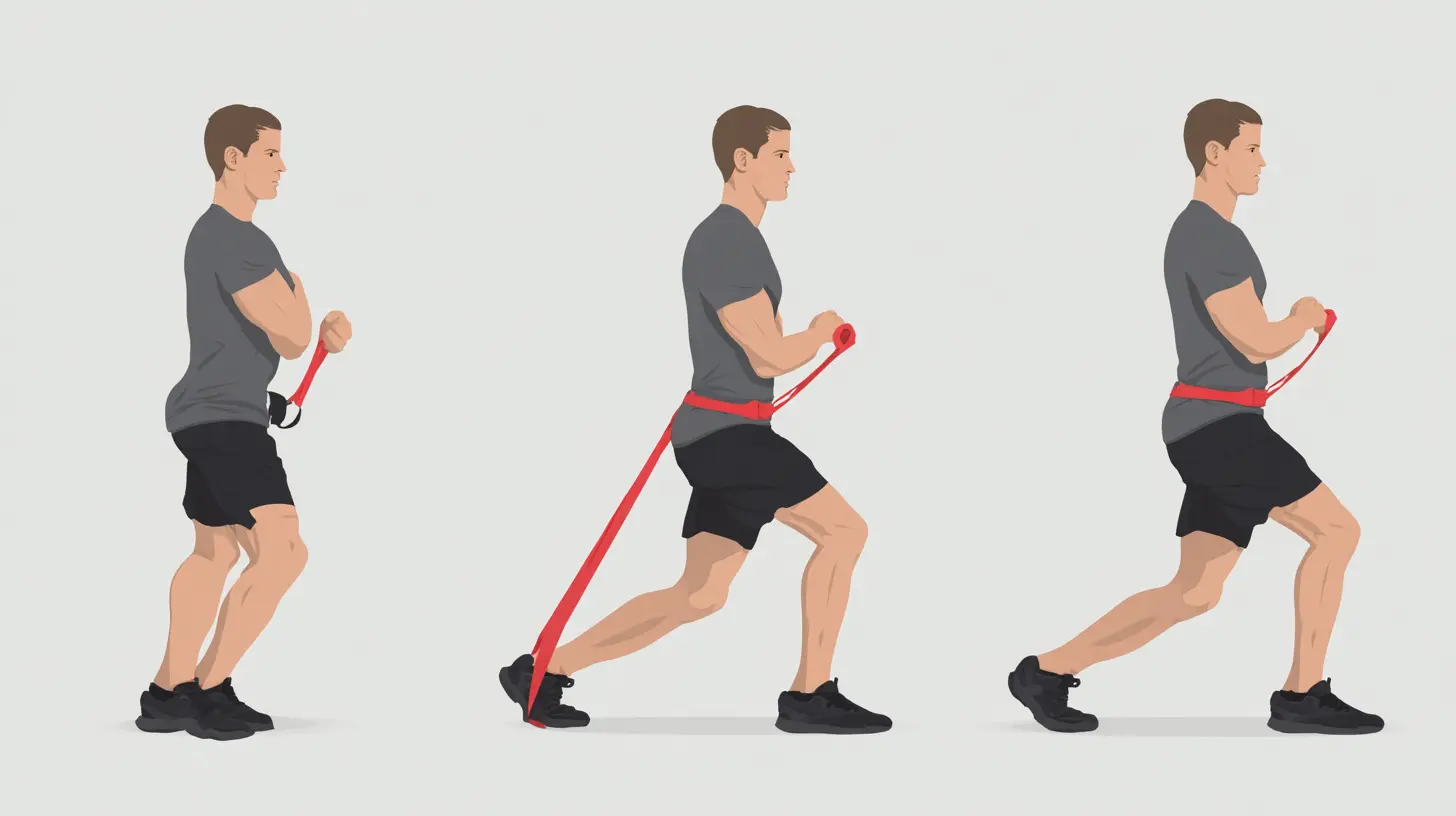
The same logic applies to the hips. Sitting all day shortens the hip flexors, but simply stretching them does not restore the ability to extend the hip during walking or running. You need to actively pull the thigh backward against resistance while keeping the pelvis stable. That is a completely different stimulus, and it is what builds the strength to hold your posture during movement.
Building a Routine That Actually Works
An effective mobility routine is not a random collection of exercises. It follows a logical sequence that prepares the body for the demands of your day or your workout. The best routines start with tissue preparation, move into joint-specific work, and finish with integrated movement patterns.Tissue preparation involves foam rolling or self-massage to reduce tone in overactive muscles. This is not about breaking up adhesions, which is a myth. Foam rolling works by temporarily altering the nervous system's input to a muscle, reducing its resting tension. That makes it easier to move the joint through a fuller range during the subsequent exercises. Spend two to three minutes on the areas that feel tightest, but do not roll for extended periods. More is not better here. Excessive rolling can actually increase inflammation in sensitive tissues.
After tissue prep, move into joint-specific mobility exercises. These should target the areas most relevant to your activity. For a runner, that means ankles, hips, and thoracic spine. For a lifter, that means shoulders, hips, and wrists. For a desk worker, that means hips, thoracic spine, and neck. The exercises should be slow, controlled, and performed for eight to twelve repetitions per side. The goal is not to bounce or force movement, but to actively move to the edge of your range, pause, and return with control.
Finish with integrated movements that combine multiple joints. Deep squat holds with an overhead reach, walking lunges with a torso rotation, or slow, controlled burpees without the jump are all excellent choices. These movements force your body to coordinate mobility across several joints simultaneously, which is what actually happens during sport and daily life.

The Most Underrated Mobility Areas
When people decide to work on mobility, they usually focus on the hamstrings and lower back. Those areas are important, but they are rarely the root cause of injury. The ankle is arguably the most neglected joint in the body, and its restrictions cause problems all the way up the kinetic chain.A lack of ankle dorsiflexion, the ability to bring your knee forward over your foot, forces the knee to track inward and the lower back to round during squats and lunges. It also changes your running gait, making you land harder on your heel and absorb less shock through your calf muscles. Simple exercises like the banded ankle mobilization, where you place a band around your knee and drive it forward over your toes, can produce dramatic improvements in squat depth and running comfort.
The thoracic spine is another area that gets far too little attention. Most people have stiff upper backs from years of sitting and hunching over screens. That stiffness forces the neck and lower back to compensate for rotation and extension that should come from the mid-back. Thoracic spine mobility work, such as kneeling rotations or foam roller extensions, can relieve tension in the neck and lower back simultaneously.
Hip external rotation is also critical. Many people lack the ability to rotate their thigh outward, which limits their ability to squat deeply and change direction safely. Exercises like the 90/90 hip shift, where you sit with both knees bent at ninety degrees and shift your torso from one side to the other, are excellent for restoring this range.
Common Mistakes That Sabotage Progress
The first mistake is doing mobility work only when something hurts. By the time you feel pain, the tissue has already been under stress for weeks or months. Mobility is a preventive practice, not a treatment. It should be done consistently, even when you feel fine.The second mistake is rushing through the exercises. Mobility work is not cardio. If you are breathing hard and moving quickly, you are not actually challenging your joints through their full range. Each repetition should take at least three to five seconds in each direction. The focus should be on quality of movement, not quantity.
The third mistake is ignoring the nervous system. If your brain perceives a movement as threatening, it will restrict your range regardless of how flexible your muscles are. This is why slow, controlled movements are more effective than aggressive bouncing. When you move slowly and breathe steadily, you signal to your nervous system that the position is safe. Over time, it will allow more range.
Another common error is neglecting to strengthen the newly gained range. If you work on deep squat mobility but never load that position with weight, your body will not maintain the range. The nervous system only invests in mobility that it needs for actual tasks. You must use the range you gain, or you will lose it within a few weeks.
How to Integrate Mobility into Your Week
There is no single correct schedule for mobility work, but some patterns are more effective than others. The best approach is to do a short mobility session every day, even if it is only ten minutes. This consistency matters more than the duration of any single session. A daily ten-minute routine will outperform a one-hour session done once a week.You can also integrate mobility work into your existing training. Perform a few mobility exercises as part of your warm-up, specifically targeting the joints you will use. This primes the nervous system and increases blood flow to the relevant tissues. After your workout, do a few longer-duration mobility holds to take advantage of the increased tissue temperature and blood flow.
On rest days, a more thorough mobility session is ideal. This is the time to work on areas that feel tight or restricted. Spend twenty to thirty minutes moving through your entire body, focusing on the joints that feel most limited. This is also a good time for self-assessment. Notice which sides feel different and which movements are harder than they were last week. That feedback is valuable for adjusting your routine.
Mobility for Specific Populations
Runners have unique mobility needs. The repetitive nature of running creates tight calves, hip flexors, and iliotibial bands. A runner's mobility routine should emphasize ankle dorsiflexion, hip extension, and pelvic control. Exercises like the couch stretch for the hip flexors and banded ankle dorsiflexion are particularly valuable. Runners should also work on single-leg balance and stability, since running is essentially a series of single-leg hops.Lifters need mobility in the shoulders, hips, and wrists to safely perform overhead presses, squats, and deadlifts. A lifter's routine should include thoracic spine extension work, hip external rotation exercises, and wrist flexion stretches. The goal is to achieve a neutral spine under load, which requires adequate mobility in the joints above and below the spine.
Desk workers face a different set of challenges. Prolonged sitting shortens the hip flexors and hamstrings, weakens the glutes, and stiffens the thoracic spine. A desk worker's routine should focus on hip openers, thoracic rotations, and neck mobility. It is also important to take movement breaks throughout the day, not just in the morning or evening. Standing up and moving through a few hip and spine exercises every hour can be more effective than a single daily session.
Older adults need mobility work that emphasizes balance and fall prevention. This means focusing on ankle strength, hip mobility, and spinal rotation. Exercises should be performed near a wall or chair for safety. The goal is to maintain the ability to get up from the floor, turn around quickly, and recover from a stumble.
The Role of Breathing in Mobility
Breathing is an overlooked component of mobility. Your diaphragm attaches to your spine and ribs, and its movement directly affects your ability to rotate and extend your trunk. Shallow, chest-based breathing restricts spinal mobility and increases tension in the neck and shoulders.When you perform mobility exercises, focus on breathing deeply into your belly. Exhale as you move into the end range of a stretch or mobilization. This exhale signals your nervous system to relax and allows for a greater range of motion. Inhale as you return to the starting position. This rhythmic breathing pattern also keeps you present and prevents you from rushing through the movements.
Diaphragmatic breathing is particularly important for lower back health. Your deep core muscles, including the transverse abdominis and pelvic floor, work in coordination with your diaphragm. If your breathing is restricted, these muscles cannot function properly, leaving your spine without adequate support. Practicing deep belly breathing while in a quadruped position or lying on your back is an excellent way to improve both mobility and core stability.
When Mobility Is Not the Answer
It is important to recognize that mobility work is not a cure-all. Some people have hypermobility, meaning they have excessive joint range. For these individuals, more mobility work is counterproductive. They need stability and strength training to control the range they already have. If you can easily touch your palms to the floor, do the splits, or dislocate your shoulders with a band, you likely fall into this category.Hypermobile individuals should focus on isometric holds and slow, controlled strength exercises at mid-range. They should avoid end-range stretching and ballistic movements. The goal is to build muscular tension to protect their joints, not to increase their already excessive range.
Similarly, if you have an acute injury, such as a muscle tear or joint sprain, mobility work is not appropriate in the early stages. The tissue needs time to heal before you begin loading it through range. Always consult a qualified professional if you are unsure whether mobility work is safe for your specific condition.
Another situation where mobility is not the answer is when the problem is purely muscular weakness. If you have good range of motion but cannot control it, you do not need more mobility. You need strength. For example, if you can touch your toes but your lower back rounds when you deadlift, the issue is not hamstring tightness. It is a lack of core and gluteal strength to maintain a neutral spine under load.
Building Your Own Routine
Creating a personalized mobility routine does not require expensive equipment or a complicated program. You need a foam roller, a yoga mat, and perhaps a resistance band. Start by identifying your most restricted joints. A simple self-test can help. Squat down as deep as you can with your heels flat. Raise your arms overhead. Twist your torso to each side. These movements will quickly reveal where you are limited.From there, select three to five exercises that target your specific restrictions. Perform them daily for two weeks and reassess. You should notice measurable improvements in your range of motion and a reduction in any nagging aches or pains. If you do not see progress, you may need to increase the frequency or duration of your sessions, or you may need to address underlying strength deficits.
A sample routine for a desk worker might look like this. Start with a minute of foam rolling on the upper back and hips. Then perform ten repetitions of a kneeling hip flexor stretch with an active posterior pelvic tilt. Follow with ten repetitions of a thoracic spine rotation on each side. Add ten repetitions of a deep squat hold with an overhead reach. Finish with ten repetitions of a glute bridge with a slow lower. This entire routine takes about fifteen minutes and can be done in the morning or before bed.
For a runner, the routine would differ. Foam roll the calves and quads. Perform banded ankle dorsiflexion for ten repetitions per side. Do a couch stretch for the hip flexors, holding for thirty seconds per side. Add single-leg deadlifts with a slow, controlled descent to improve hip control and balance. Finish with a few minutes of walking lunges with a torso twist.
The Long-Term Perspective
Mobility is not a quick fix. It is a lifelong practice that pays dividends over years and decades. The people who maintain their mobility into old age are the ones who can still get down on the floor to play with their grandchildren and stand up without using their hands. They are the ones who avoid the hip replacements and back surgeries that plague so many older adults.The most effective approach is to view mobility as part of your daily hygiene, like brushing your teeth or taking a shower. It is not something you do for a month and then abandon. It is a consistent investment in your future physical function. The time you spend on mobility now will save you far more time in the future by preventing the injuries that would otherwise sideline you from work, exercise, and life.
Start small. Pick two or three exercises that target your most obvious restrictions. Do them every day for a week. Notice how your body feels. Then add more as the habit becomes established. The exact exercises matter less than the consistency and the attention you bring to each movement. Your body is constantly adapting to the demands you place on it. By including mobility work in your routine, you are sending a clear signal that you want to maintain your full range of motion and move safely for years to come.
all images in this post were generated using AI tools
Category:
Exercise RoutinesAuthor:

Angelo McGillivray
Discussion
rate this article
1 comments
Franklin Morales
If you think sitting all day is fine, think again. Your body is begging for movement. Try these routines or prepare to meet the chiropractor. Your future self will definitely thank you... or regret it.
September 13, 2026 at 3:37 AM