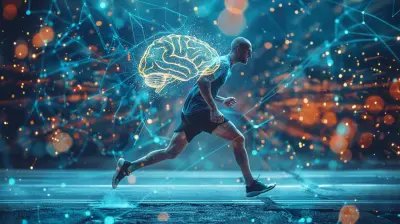
How Creativity Fuels Mind-Body Balance
31 October 2026
Creativity is often treated as a talent reserved for artists, designers, or musicians. That framing misses something important. Creativity is a basic cognitive and emotional process that every person uses, and it has a direct influence on how the body and mind regulate themselves. When people engage in creative activity, whether that means painting, cooking without a recipe, solving a work problem in a new way, or writing in a journal, measurable shifts occur in stress physiology, mood, and cognitive flexibility. This article examines those connections in practical terms and explains how to use creative practice as a genuine tool for mind-body balance, not as a vague wellness slogan.

What Mind-Body Balance Actually Means
Before discussing creativity, it helps to define the outcome. Mind-body balance does not mean constant calm or the absence of stress. It means the body's stress response and recovery response are appropriately matched to demand. A well-regulated system can activate under pressure and return to baseline afterward. Problems arise when activation becomes chronic and recovery never fully happens.Signs that this balance is off include:
- Persistent muscle tension, especially in the jaw, neck, and shoulders
- Sleep that feels unrefreshing even when long enough
- Digestive irregularity that flares during stressful periods
- Difficulty shifting attention away from worry
- Emotional reactivity that feels disproportionate to the situation
Creative activity addresses several of these pathways at once, which is why it tends to produce effects that feel broader than a single intervention. It engages attention, movement, emotion, and meaning simultaneously. That combination is difficult to replicate with passive relaxation alone.
The Physiology of Creative Engagement
Stress hormones and the relaxation response
When a person becomes absorbed in a creative task, the body tends to shift away from sympathetic dominance, the fight-or-flight mode, toward a more parasympathetic state. This is not mystical. Absorption in a task reduces threat monitoring. When attention is anchored in a concrete activity, the mind stops scanning for danger, and the physiological cascade that accompanies rumination quiets down.The key word is absorption. Passive scrolling does not produce this effect because it keeps attention jumping. Creative work, by contrast, demands sustained focus on a single unfolding process. Heart rate variability, a common marker of autonomic flexibility, tends to improve during and after engaging creative tasks, though the size of the effect varies widely between individuals and activities.
The role of the vagus nerve
The vagus nerve is a major channel of the parasympathetic nervous system. Activities that involve fine motor control, breath regulation, and vocalization, such as singing, drawing, or playing an instrument, engage vagal pathways. Slow, controlled movements and rhythmic activity stimulate this system. This is one reason why creative practices that involve the hands and breath together, such as pottery, knitting, or playing a stringed instrument, often feel calming in a way that watching television does not.Why the hands matter
A large portion of the brain's motor and sensory cortex is dedicated to the hands. Tasks that use fine motor skills activate widespread neural networks and pull attention into the present moment. This is a mechanical form of grounding. When your hands are occupied with a task that requires precision, your mind has less capacity to rehearse anxious scenarios. The effect is not absolute, but it is reliable enough to be useful.
Creativity and Emotional Regulation
Externalizing internal states
Emotions that stay internal tend to loop. Writing them down, drawing them, or expressing them through movement converts an abstract internal state into something external and observable. This process, sometimes called affect labeling when done verbally, reduces emotional intensity. The act of naming or representing an emotion engages prefrontal regions that help dampen amygdala reactivity.Practical example: a person who cannot articulate why they feel agitated may find that a few minutes of free writing reveals the actual source, often something they had been avoiding. The relief that follows is not just psychological. Muscle tension often drops once the emotion is identified and expressed.
Distress tolerance through process focus
Creative work trains attention on process rather than outcome. This is a skill with direct clinical value. People who can tolerate imperfect process, who can sit with a work in progress without needing it to be finished or correct, tend to handle uncertainty better in other areas of life. The studio becomes a low-stakes rehearsal space for tolerating ambiguity.This is why the advice to "just relax" often fails while creative engagement succeeds. Relaxation asks a person to stop doing. Creative engagement gives the mind something structured to do, which is often more accessible for people who find stillness uncomfortable.
When creativity can backfire
Creative activity is not universally calming. Several conditions can turn it into a stressor:- Perfectionism. If the creative task becomes a performance evaluation, it can trigger the same threat response as work.
- Comparison. Sharing work on social media and measuring it against others undermines the regulating effect.
- Deadline pressure. Turning a hobby into a second job removes the restorative quality.
- Emotional flooding. For people with unprocessed trauma, expressive activities can surface material faster than they can manage. In those cases, creative work should be done with professional support.
The distinction matters. Creativity regulates when it is exploratory and non-judgmental. It dysregulates when it becomes evaluative.

Creativity as a Cognitive Reset
Attention restoration
Directed attention, the kind used for focused work and screen tasks, fatigues over time. Creative activity often uses a different mode of attention, one that is more associative and less effortful. This is similar to what attention restoration theory describes for time in nature. The mind gets a break from the specific type of effort that depletes it.This is why a short creative break can feel more restorative than an equally short passive break. Ten minutes of sketching or playing an instrument can reset focus in a way that ten minutes of reading headlines does not.
Cognitive flexibility
Creative practice exercises the ability to generate multiple possible responses to a problem. This is the same capacity that supports stress coping. A person who can imagine several ways to interpret a setback is less likely to get stuck in a single catastrophic narrative. Creativity training, in this sense, is coping training in disguise.Interrupting rumination
Rumination is repetitive, passive thinking about problems. It is strongly associated with both mood disorders and physical stress symptoms. Creative tasks interrupt rumination because they demand working memory resources. You cannot simultaneously rehearse the same worry loop and solve a compositional problem in music or figure out how to make a sauce come together. The interruption is temporary, but repeated interruption weakens the rumination habit over time.The Body Side of the Equation
Movement and posture
Many creative practices involve physical movement: dancing, playing an instrument, building, gardening, sculpting. Even seated practices involve posture and breath. This means creativity can function as a form of movement that does not feel like exercise, which matters for people who struggle to maintain conventional workout routines.The trade-off is that some creative practices are highly sedentary. A painter or writer may sit for hours. The mind-body benefit is reduced if the body is static and compressed for long stretches. The practical fix is to build movement into the practice itself, such as standing while working, taking breaks to stretch, or alternating between seated and active creative tasks.
Breath and nervous system regulation
Singing, wind instruments, and many forms of performance require controlled breathing. Slow, extended exhalation activates the parasympathetic system. This is one of the most direct routes to physiological calm available. A person who practices a wind instrument or sings regularly is, in effect, doing breath training without calling it that.Sleep
Creative engagement during the day tends to support sleep quality, partly through stress reduction and partly through the sense of meaning and accomplishment it provides. The exception is creative work done late at night, especially screen-based work or work that is highly activating. Timing matters. Morning or afternoon creative sessions tend to support sleep; late-night intense sessions can delay it.
Meaning, Identity, and the Deeper Layer
There is a layer of mind-body balance that goes beyond physiology. People who feel their lives have meaning and coherence tend to show better health outcomes across many measures. Creativity contributes to this sense of coherence in several ways.First, it provides a sense of agency. Making something, even something small, is evidence that you can affect the world. That evidence counters helplessness, which is one of the most corrosive psychological states for physical health.
Second, it supports identity. Many people describe their creative practice as a core part of who they are, not just something they do. Having an identity anchor that is separate from work or caregiving responsibilities protects against the stress of role overload.
Third, it creates connection. Group creative activities, from choirs to writing groups to community art projects, provide social contact that is structured and low-pressure. Social connection is one of the strongest known predictors of health and longevity.
Practical Ways to Build a Creative Practice for Balance
Start with what you already do
The most sustainable creative practices grow out of existing routines. Cooking, gardening, home repair, and even organizing can be approached creatively. The difference between a chore and a creative practice is the intention you bring: experimenting, varying, and paying attention to process rather than just completing the task.Set a low bar for entry
The biggest mistake people make is treating creative practice as a performance that requires preparation. A five-minute sketch, a short free-write, or a few minutes of playing an instrument is enough to produce benefit. Consistency matters more than duration. A daily ten-minute practice outperforms a monthly three-hour session for most people.Separate practice from production
Keep at least one creative activity that is not shared, not monetized, and not evaluated. This protects the regulating function. Many people ruin a restorative hobby by turning it into a side business. The moment it becomes an obligation with external stakes, the stress-reducing effect weakens.Match the activity to your state
Different creative activities serve different purposes:- When agitated: rhythmic, repetitive activities such as knitting, coloring, or simple instrument practice
- When numb or flat: expressive activities such as free writing, painting, or movement
- When overwhelmed: structured, contained tasks with clear parameters, such as following a recipe with one variation or building something with instructions
- When mentally fatigued: low-demand creative play such as doodling or arranging objects
Choosing deliberately makes the practice more effective than defaulting to whatever is habitual.
Protect the time
Creative time gets crowded out first because it is not urgent. Scheduling it, even briefly, and treating it as non-negotiable protects it. Many people find that attaching it to an existing anchor, such as right after morning coffee or before dinner, makes it stick.Notice and adjust
Pay attention to how you feel after creative sessions. If you feel calmer, clearer, and more grounded, the practice is working. If you feel more tense, judged, or drained, something needs to change: the activity, the setting, the stakes, or the timing. The practice should serve regulation, not add to the load.
Common Misconceptions
"I'm not creative." Creativity is not a fixed trait. It is a capacity that everyone uses daily in problem-solving and adaptation. The belief that creativity belongs to a special group is one of the main barriers to using it therapeutically."Creativity requires talent." Talent affects output quality, not the physiological and psychological benefits of engagement. The regulating effects come from the process, not the product.
"Creative work is inherently relaxing." It can be, but only under the right conditions. High-stakes, evaluative, or perfectionistic creative work can be as stressful as any other demanding task.
"Any creative activity works equally well." Different activities engage different systems. Matching the activity to your current state and needs produces better results than assuming one practice fits all situations.
"You need long blocks of time." Short, frequent sessions are often more effective for regulation than infrequent long ones, because they build the habit and provide repeated nervous system resets.
Bringing It Together
Mind-body balance is not a state you achieve once. It is a pattern of regulation and recovery that you maintain. Creativity supports that pattern through several mechanisms at once: it reduces threat monitoring, engages the parasympathetic system, interrupts rumination, builds cognitive flexibility, provides physical engagement, and anchors identity and meaning.The practical implication is straightforward. Treat creative practice as a health behavior, not a luxury. Keep it low-stakes, consistent, and matched to your current state. Protect at least one activity from evaluation and monetization. Notice how you feel and adjust accordingly. Used this way, creativity becomes one of the more accessible and durable tools available for supporting both mental and physical well-being.
all images in this post were generated using AI tools
Category:
Mind Body ConnectionAuthor:

Angelo McGillivray