The Real Scoop on Sugar Substitutes and Artificial Sweeteners
20 October 2026
Walk into any grocery store and you will find a wall of drinks, yogurts, desserts, and cereals promising sweetness without the calories. The labels advertise zero sugar, no added sugar, or sweetened with stevia. Behind those claims sits a crowded and often misunderstood category: sugar substitutes. Some are synthetic molecules built in laboratories. Some are extracted from plants. Some are ordinary sugars chemically altered so the body barely registers them. They share one job, which is to make food taste sweet with less sugar or none at all, but they behave very differently once you swallow them.
This article takes a practical, evidence aware look at what these compounds actually are, how they work in the body, where they help, where they can backfire, and how to make sensible choices without turning every snack into a research project. The goal is not to crown a winner or declare a villain. It is to give you the working knowledge to read a label, understand a headline, and decide what belongs in your own kitchen.
What Counts as a Sugar Substitute
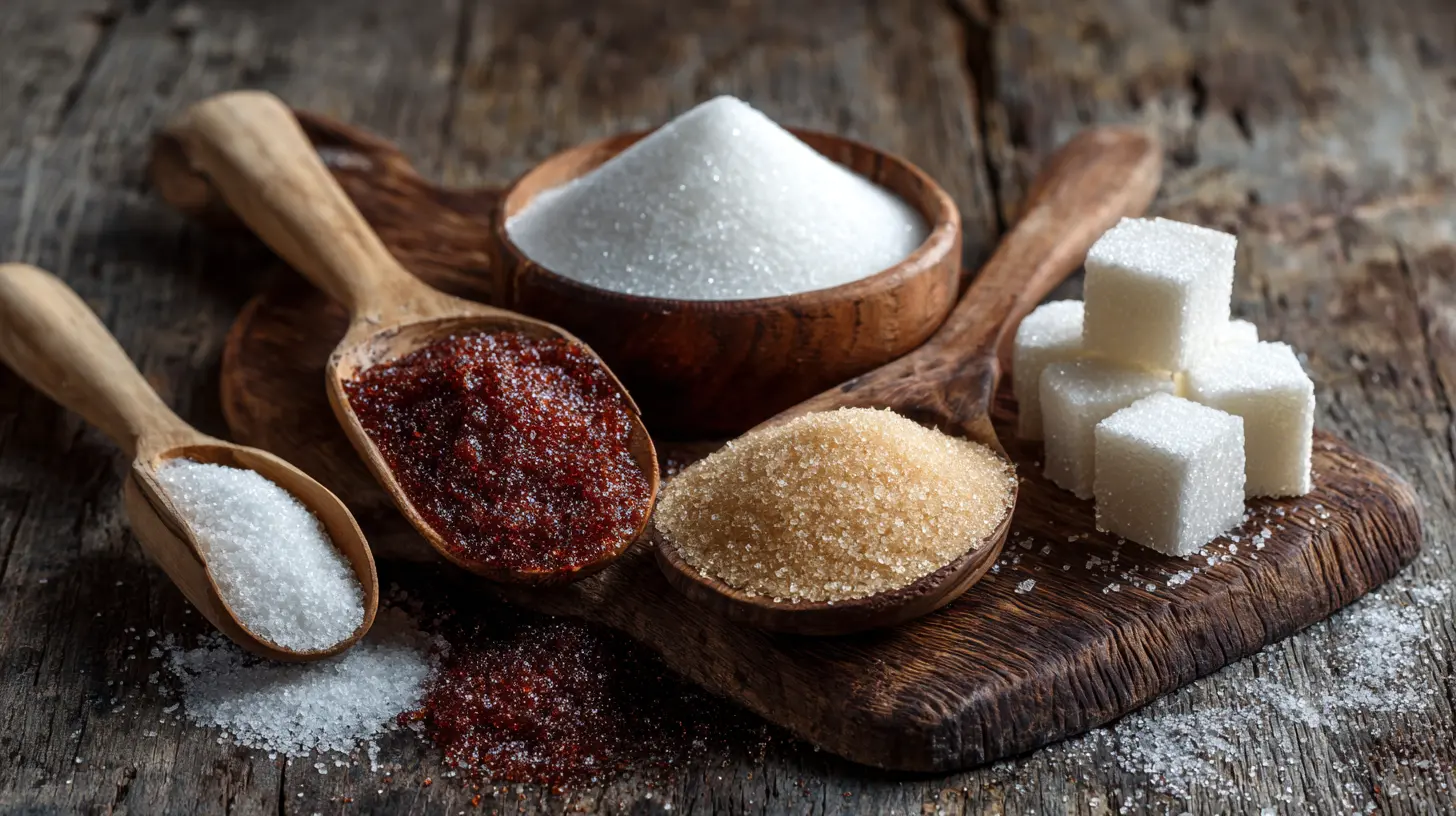
The term sugar substitute is an umbrella. It covers several distinct groups, and conflating them is the source of much confusion.Artificial sweeteners are synthetic or semi synthetic compounds with intense sweetness and negligible calories. Common examples include aspartame, sucralose, saccharin, acesulfame potassium, and advantame. They are often hundreds of times sweeter than table sugar, so tiny amounts do the job.
Natural non caloric sweeteners come from plants. Steviol glycosides from the stevia leaf and mogrosides from monk fruit are the best known. They are still processed into extracts and powders, so natural here describes the source, not the manufacturing.
Sugar alcohols, also called polyols, include sorbitol, xylitol, erythritol, maltitol, and mannitol. They occur naturally in some fruits and are also made commercially. They contain calories, though far fewer than sugar, and they are absorbed slowly, which explains both their modest blood sugar impact and their reputation for digestive trouble.
Rare sugars and modified sugars such as allulose, tagatose, and isomaltulose sit in a gray zone. Allulose is a real sugar that the body does not metabolize for energy in the usual way. Isomaltulose is a disaccharide that breaks down more slowly than sucrose. These blur the line between sugar and substitute.
High intensity natural alternatives like honey, maple syrup, coconut sugar, and agave are not low calorie substitutes in any meaningful sense. They are sugars with different flavor profiles and slightly different metabolic handling. Treating them as health foods because they sound artisanal is a common mistake.
Understanding which bucket a product falls into matters because the research, the taste, the digestive effects, and the practical advice differ from group to group.
How Sweeteners Fool Your Tongue
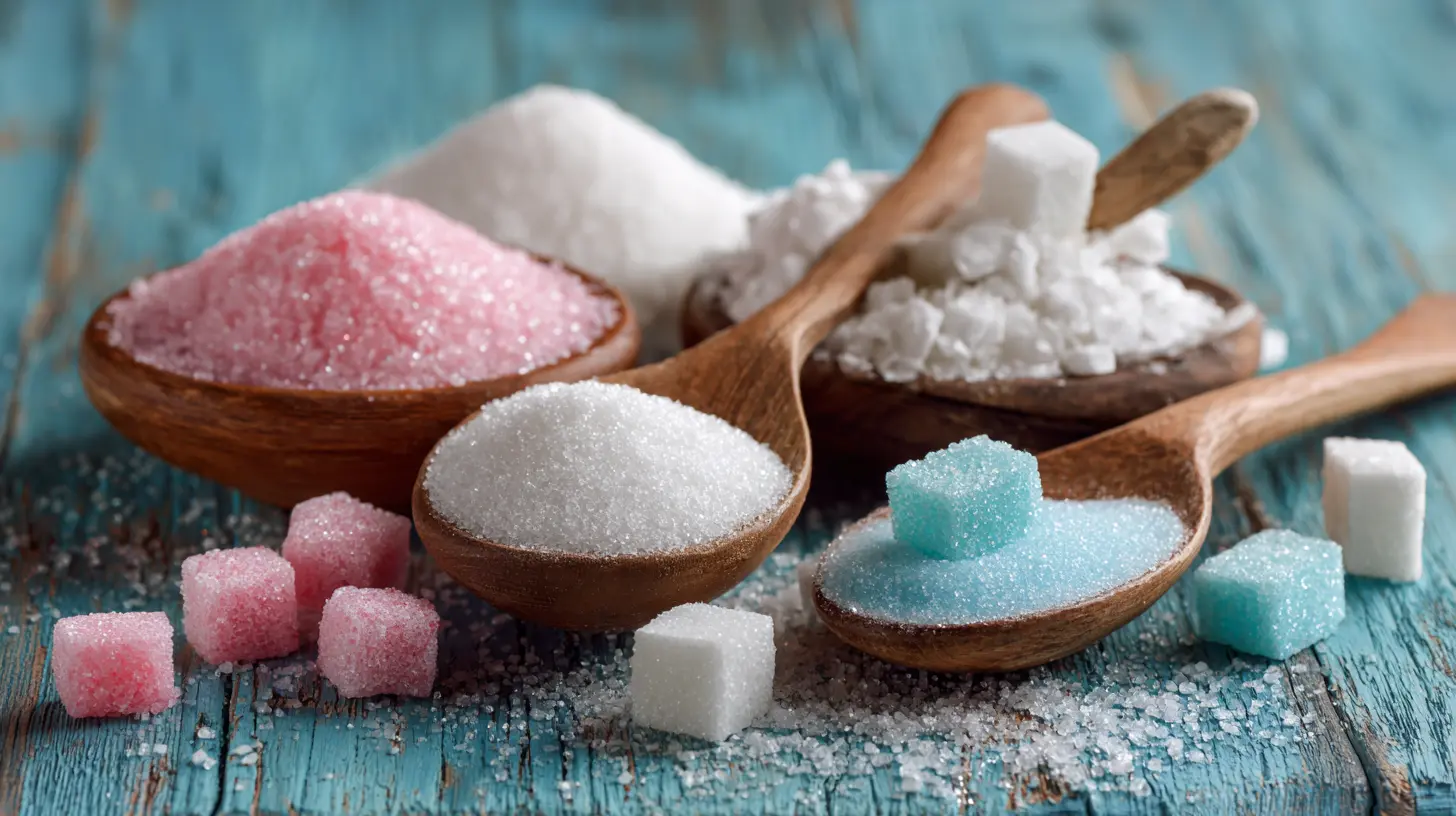
Sweetness begins at receptor proteins on your tongue, primarily a pair called T1R2 and T1R3. Sugar fits into these receptors and triggers a signal to the brain that reads as sweet. Many artificial sweeteners bind the same receptors far more strongly, which is why a pinch of sucralose can match the sweetness of several spoonfuls of sugar. Others, like stevia compounds, interact with the receptors in a slightly different way, which is why some people detect a bitter or licorice like aftertaste.Here is the crucial point that shapes everything else: tasting sweet and being sweet are not the same as being sugar. Your mouth sends a sweetness signal, but your digestive system may receive no calories at all. That mismatch is the root of both the appeal and the controversy. The appeal is obvious, since you get the taste without the metabolic load. The controversy is whether the body, expecting energy that never arrives, responds in ways that undermine the benefit.
The Evidence on Weight and Appetite
The most common reason people reach for sugar substitutes is weight control. The logic seems airtight: replace caloric sweeteners with non caloric ones and total calories fall. In controlled settings, that logic largely holds. When people swap sugary drinks for diet drinks in studies, total calorie intake usually drops and modest weight loss often follows. For someone drinking several regular sodas a day, switching is one of the simplest changes with a measurable payoff.Real life is messier. Observational studies have repeatedly found that people who consume more artificial sweeteners tend to have higher body weight, not lower. This does not prove the sweeteners cause weight gain. People with weight concerns are more likely to choose diet products in the first place, a classic reverse causation trap. The honest reading is that the observational data are confounded and should not be used to condemn sweeteners outright, but they also do not deliver a clean endorsement.
There is a more subtle behavioral question. Some researchers have proposed that sweet tastes without calories may leave the brain expecting energy that never comes, potentially nudging appetite or altering how the body handles later meals. The evidence for this is mixed and generally weak in humans, and effects, when seen, tend to be small. A more reliable pattern is psychological: a person who feels virtuous after a zero calorie soda may unconsciously "spend" those saved calories elsewhere, a phenomenon sometimes called the licensing effect. The sweetener did not cause the extra food. The mindset around it did.
Practical takeaway: sugar substitutes are a tool for reducing sugar, not a magic switch for weight loss. They work best as a bridge away from heavily sweetened foods, not as a permanent license to eat more.
Blood Sugar and Diabetes
For people with diabetes, the appeal of non caloric sweeteners is strong because they generally do not raise blood glucose. Most artificial sweeteners and steviol glycosides pass through the body without contributing meaningful carbohydrate. Sugar alcohols raise blood sugar less than regular sugar but are not entirely free of effect, and maltitol in particular can move glucose more than people expect. Allulose is unusual in that it is a sugar but is largely excreted without being metabolized, so it has minimal impact on blood glucose.Two caveats deserve attention. First, some studies suggest that certain sweeteners may influence glucose tolerance indirectly by shifting the gut microbiome, though results are inconsistent and mostly from small or animal studies. Second, the psychological and behavioral effects still apply. A person who drinks diet soda but pairs it with refined carbohydrates has not solved the underlying issue.
Sugar substitutes are legitimately useful for people managing diabetes who want sweetness without glucose spikes. They are not a substitute for understanding total carbohydrate intake and meal composition.
The Gut Microbiome Question
The gut microbiome has become the most active frontier in sweetener research. Your intestines host trillions of bacteria that influence digestion, immune function, and metabolism. Some studies have found that certain sweeteners, particularly saccharin and sucralose, can alter the composition or function of gut bacteria in laboratory and animal models. A few small human studies have reported changes in glucose tolerance after short term sweetener intake.This is genuinely interesting science, but it is not yet a settled verdict. Study designs vary widely, doses often exceed typical consumption, and human results are inconsistent. The microbiome is also highly individual, so a shift in one person may not occur in another. The responsible conclusion is that this is a plausible area of concern worth watching, not a reason to panic or to abandon sweeteners wholesale. If you have gut symptoms that seem tied to a specific product, that personal signal is worth more than any population level study.
Sugar Alcohols and the Digestive Trade Off
Sugar alcohols illustrate the principle that fewer calories can come with a cost. Because they are absorbed slowly and incompletely, they draw water into the intestines and ferment when they reach the colon. The result can be bloating, gas, cramping, and loose stools, especially when consumed in large amounts or by people with sensitive digestion.Erythritol is the exception in practice. It is absorbed quickly and mostly excreted in urine, so it causes far fewer digestive issues than maltitol or sorbitol. Xylitol sits in the middle and has the bonus of being actively protective against tooth decay, which is why it appears in many sugar free gums. Maltitol is the most likely to cause trouble and is common in sugar free chocolates and candies, a combination that has produced many memorable stories of overindulgence.
Practical rule: if you are new to sugar alcohols, start small and see how your body responds. Do not eat a whole bag of sugar free candy on a road trip and expect a smooth ride.
Dental Health
Dentists have a clearer position than most. Regular sugar feeds the bacteria that cause cavities, and frequent sipping or snacking on sugary foods keeps acid production high. Non caloric sweeteners do not feed those bacteria, so they are generally kinder to teeth. Xylitol goes further and appears to actively inhibit cavity causing bacteria, which is why it is used in dental products. If you are choosing between a sugary drink and a diet one for your teeth, the diet option is the better bet.
Common Misconceptions Worth Clearing Up
"Artificial sweeteners cause cancer." This claim traces back to older animal studies, notably saccharin in rats, that did not translate to humans at realistic doses. Regulatory agencies have reviewed the evidence repeatedly and continue to consider approved sweeteners safe within established limits. That does not mean zero risk forever, but the cancer claim, as commonly stated, overstates what the science shows."Natural means safe and artificial means dangerous." Stevia and monk fruit are natural in origin but still processed. Aspartame is synthetic but among the most studied food additives in history. The natural label is about sourcing, not a safety guarantee.
"Sugar free means healthy." A sugar free cookie can be loaded with refined flour, saturated fat, and additives. Removing sugar does not automatically make a food nutritious.
"Sweeteners spike insulin." Most non caloric sweeteners do not raise blood glucose or insulin meaningfully on their own, though the taste of sweetness can trigger a small cephalic response in some people. It is generally minor.
"Agave and coconut sugar are fine because they are natural." They are sugars. Agave is high in fructose. Coconut sugar has a slightly lower glycemic index than table sugar but still delivers calories and affects blood sugar.
Reading Labels Without Getting Fooled
Labels are designed to sell, not to educate. A few habits cut through the noise.Check the ingredient list, not just the front of the package. Sweeteners appear under many names: sucralose, acesulfame potassium, aspartame, steviol glycosides, erythritol, maltitol, allulose, and more. A product can be sugar free and still contain several of them.
Watch for the word "blends." Manufacturers often combine a high intensity sweetener with a small amount of real sugar or maltodextrin to round out the taste. That can add calories or carbohydrate you did not expect.
Be skeptical of "no added sugar." It means no sugar was added during processing, not that the product is low in naturally occurring sugars or calories. Fruit juice concentrates are a common workaround.
Pay attention to serving size. A product with 2 grams of sugar alcohol per serving may look harmless until you realize a realistic portion is several servings.
How to Choose in Practice
There is no single best sweetener. The right choice depends on your goal, your digestion, your taste, and how you use it.If your goal is to cut sugar from drinks, diet sodas and stevia sweetened beverages are a reasonable stepping stone. Many people find that over time their taste for intense sweetness fades, and water or unsweetened tea becomes more appealing. That taste adaptation is one of the most underrated benefits of reducing sugar.
If you bake, allulose and erythritol based blends behave more like sugar than high intensity sweeteners, which cannot replace sugar's bulk, browning, and texture. Expect some trial and error, and do not assume a one to one swap will work.
If you have diabetes, non caloric sweeteners and allulose are generally the friendliest options, but watch total carbohydrate from other ingredients.
If you have irritable bowel syndrome or a sensitive gut, favor erythritol or stevia over maltitol and sorbitol, and keep portions modest.
If you are pregnant or managing a specific medical condition, talk to your clinician rather than relying on general guidance. Approved sweeteners are considered safe in pregnancy within normal intake, but individual circumstances vary.
A Sensible Bottom Line
Sugar substitutes are neither miracle ingredients nor hidden poisons. They are tools with real benefits and real limitations. They can help you cut sugar, manage blood glucose, and protect your teeth. They can also encourage a false sense of virtue, cause digestive discomfort, and keep a powerful sweet tooth alive. The most useful question is not "are they safe" in the abstract but "what role is this playing in my diet."If a sweetener helps you move away from sugary drinks and toward more whole foods, it is doing its job. If it becomes a justification for eating more processed food, it is not. Use them deliberately, read labels, notice how your body responds, and let your own experience, backed by a clear understanding of the science, guide the choice. That is the real scoop.
all images in this post were generated using AI tools
Category:
Nutrition MythsAuthor:

Angelo McGillivray