Should You Avoid Nightshade Vegetables? The Facts Examined
25 October 2026
Nightshades have become one of the most debated food families in recent years. Walk through any wellness forum and you will find passionate claims that tomatoes, peppers, potatoes, and eggplant cause inflammation, joint pain, and digestive misery. Walk into a cardiologist's office and you will hear praise for the Mediterranean-style eating pattern that leans heavily on tomatoes and peppers. Both conversations are happening at the same time, and they leave a lot of people confused about what to put on their plate.
This article takes a careful look at that tension. Not to pick a side for the sake of being contrarian, but to separate what we actually know from what has been assumed, exaggerated, or repeated until it sounded true. If you have ever wondered whether that ache in your knee is somehow connected to the marinara sauce you had for dinner, you deserve a real answer rather than a slogan.
What Are Nightshade Vegetables, Exactly?
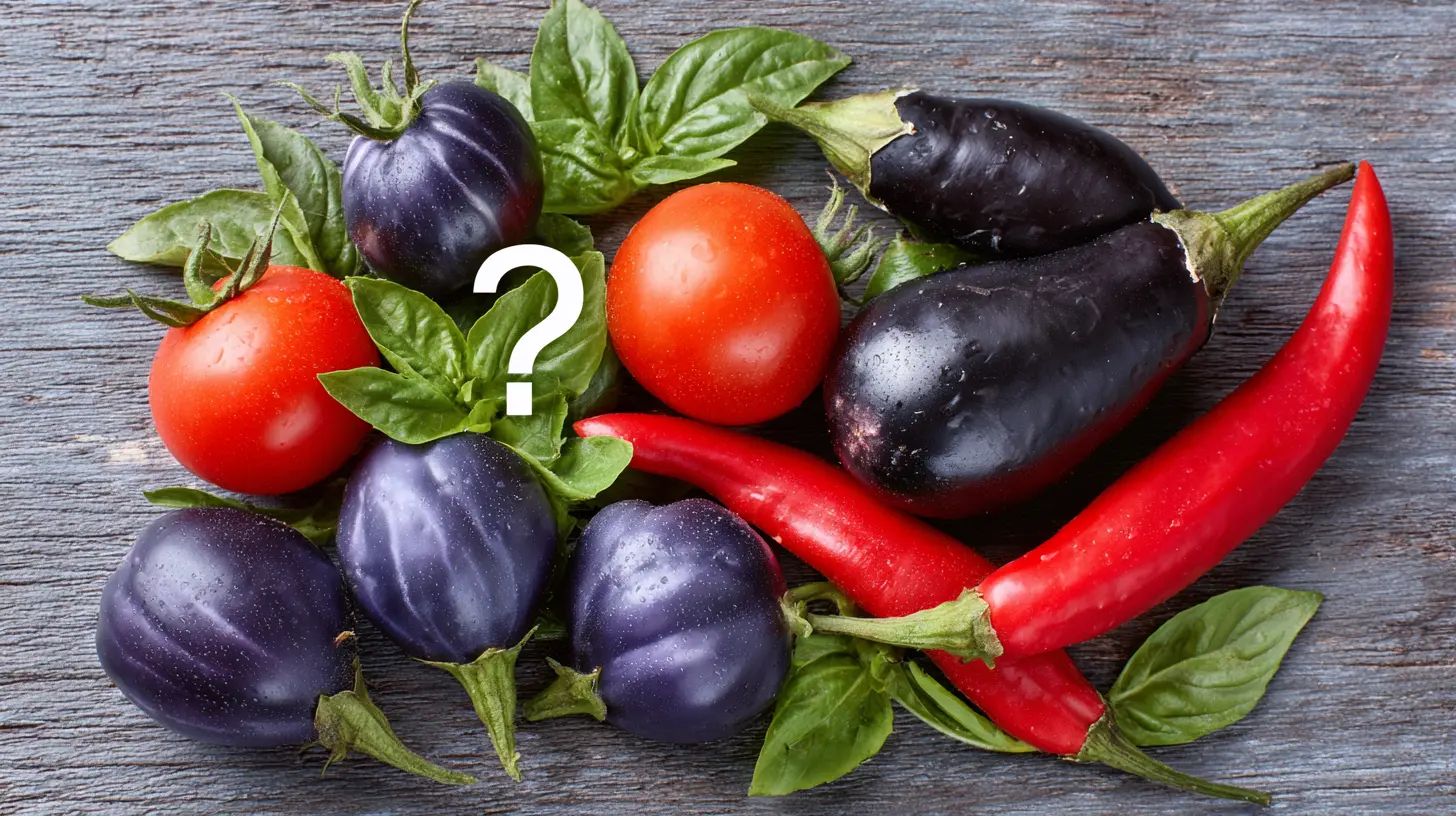
The nightshade family, known botanically as Solanaceae, is a large plant group that includes roughly 2,700 species. Most of them are not food at all. The family includes tobacco, petunias, and belladonna, which is where the family's somewhat sinister reputation began. The edible members are a small and rather ordinary subset: tomatoes, peppers of all kinds (bell, chili, jalapeno, paprika), white and red potatoes, eggplant, and tomatillos. Goji berries also belong to the family, though they are less commonly discussed.The name itself comes from the fact that many of these plants grow and flower at night, or at least appear to prefer shaded conditions. There is nothing inherently toxic about the edible nightshades when they are prepared and eaten normally. This is an important point because the word "nightshade" carries an ominous ring that has led people to assume the worst before they ever look at the evidence.
What the edible nightshades do share is a class of compounds called glycoalkaloids, most notably solanine in potatoes and tomatine in tomatoes. These substances exist in the plant as a natural defense against insects and microbes. They are present in small amounts in the parts we eat and in much larger amounts in the leaves and stems, which is why you should never eat potato leaves or green, unripe tomatoes in quantity. The presence of these compounds is the seed from which most nightshade fears have grown.
Why Nightshades Got a Bad Reputation
The anti-nightshade movement did not emerge from nowhere. It has a few legitimate roots that have since been stretched well beyond what the evidence supports.The first root is the glycoalkaloid story. Because solanine and related compounds can be toxic at high doses, it is reasonable to ask whether chronic low-dose exposure matters. This is a fair scientific question. The problem is that the doses found in a normal serving of potato or tomato are far below any level associated with harm in humans, and the body handles them without difficulty in most people. The leap from "high doses are toxic" to "normal servings cause disease" is a large one that the research does not support.
The second root is the arthritis connection. Some people with joint pain report that removing nightshades reduces their symptoms. These reports are real and worth taking seriously, but they are individual observations, not evidence of a general rule. There is no reliable body of controlled research showing that nightshades cause or worsen arthritis in the population at large. What likely happens is that a small subset of people have an idiosyncratic sensitivity, and their experience gets generalized into advice for everyone.
The third root is the inflammation narrative. Tomatoes and peppers are sometimes described as inflammatory because they contain compounds that can influence inflammatory pathways in laboratory settings. But laboratory findings rarely translate directly into human outcomes, and in the case of tomatoes, the overall picture is the opposite. Tomato consumption is associated with lower markers of inflammation in many observational studies, likely because of lycopene and other antioxidants.
The Science on Glycoalkaloids: Real Risk or Overblown Concern?
Let us look closely at solanine, since it is the compound most often cited as the reason to avoid nightshades.Solanine is found in all parts of the potato plant, but the highest concentrations are in the leaves, sprouts, and green skin. A normal peeled potato contains very little. The levels that cause acute illness, which include nausea, vomiting, and in severe cases neurological symptoms, are on the order of several milligrams per kilogram of body weight. To reach that from ordinary potatoes, you would have to eat an implausible amount of green, sprouted, or damaged tubers.
This is why public health agencies advise against eating green potatoes and potato sprouts, and why you should store potatoes in the dark. These are practical food safety measures, not reasons to avoid potatoes altogether. The same logic applies to tomatoes. Tomatine is present in the fruit at low levels and in the leaves at much higher levels. Ripe tomatoes are safe. The green parts of the plant are not food.
Here is the trade-off to consider. If you are highly cautious, you can reduce your glycoalkaloid exposure by peeling potatoes, removing sprouts and green spots, and avoiding unripe tomatoes. These steps cost you very little and address the only well-established risk in this area. Avoiding the entire family is a much larger sacrifice that the toxicology does not justify for most people.
What About Inflammation and Joint Pain?
This is where the conversation gets personal for many readers. Joint pain is common, frustrating, and often poorly explained by conventional medicine, which makes dietary experimentation attractive. That is understandable.The honest answer is that we do not have strong evidence that nightshades cause joint pain in most people. What we have is a collection of anecdotal reports and a small number of studies that are not robust enough to draw firm conclusions. Some people with osteoarthritis or rheumatoid arthritis report improvement after eliminating nightshades. Others report no change. Still others report improvement after eliminating dairy, gluten, or added sugar, which suggests that the specific food may matter less than the general act of cleaning up the diet and reducing processed food intake.
There is also a plausible mechanism for individual sensitivity. Some people may have subtle immune reactions to specific proteins or glycoalkaloids, the same way some people react to shellfish or strawberries. If you are one of those people, removing the trigger could genuinely help. The key word is "if." You cannot know without testing it in a structured way, and the test needs to be honest enough to distinguish real improvement from the placebo effect, which is powerful in dietary interventions.
A practical approach is an elimination and reintroduction trial. Remove all nightshades for three to four weeks, keeping the rest of your diet as stable as possible so you are not changing multiple variables at once. Track your symptoms daily using a simple scale. Then reintroduce one nightshade at a time, such as tomatoes for a week, then peppers, then potatoes, and note what happens. If nothing changes, you have your answer and you can stop worrying. If a specific food reliably triggers symptoms, you have found something useful and can make a targeted decision rather than a blanket one.
The Nutritional Cost of Cutting Nightshades
Before you decide to eliminate an entire food family, it is worth understanding what you would be giving up. This is the part of the conversation that often gets skipped.Tomatoes are one of the richest dietary sources of lycopene, a carotenoid linked in numerous studies to lower risk of prostate cancer and cardiovascular disease. Lycopene is more bioavailable when tomatoes are cooked with a little fat, which is why cooked tomato products like sauce and paste are particularly valuable. Tomatoes also provide vitamin C, potassium, folate, and vitamin K.
Peppers, especially red and yellow bell peppers, are extraordinarily high in vitamin C. A single medium red bell pepper can provide more than a day's recommended intake. They also contain vitamin A precursors, vitamin B6, and a range of antioxidants. Chili peppers contain capsaicin, which has been studied for pain relief and metabolic effects.
Potatoes, often dismissed as empty starch, are actually a good source of potassium, vitamin C, and resistant starch when cooled after cooking. They are one of the most satiating foods per calorie and have a place in a balanced diet, especially when prepared without excessive frying.
Eggplant provides fiber, potassium, and anthocyanins in the skin. It is lower in nutrients than the others but still contributes to diet quality and variety.
If you remove this entire family, you need to replace those nutrients from other sources. That is entirely possible, but it requires intention. Many people who eliminate nightshades end up eating fewer vegetables overall, which is a net negative for health. This is the central trade-off: the theoretical benefit of avoidance versus the concrete cost of lost nutrients and reduced dietary diversity.
Who Might Genuinely Benefit From Avoiding Nightshades?
Despite the skepticism in this article, there are situations where avoidance makes sense. Being balanced means acknowledging them.People with a confirmed or strongly suspected individual sensitivity should avoid the specific foods that trigger symptoms. This is not about the family as a whole but about their body's response, and it deserves respect.
People with certain digestive conditions may find that peppers, particularly hot peppers, aggravate symptoms. Capsaicin can irritate an already sensitive gut lining. This is a symptom management issue rather than a toxicity issue, but the practical advice is the same.
People with kidney disease may need to limit potatoes and tomatoes because of their potassium content. This is a medically driven restriction, not a nightshade-specific one, and it should be guided by a clinician.
People taking certain medications, such as potassium-sparing diuretics or ACE inhibitors, may also need to watch potassium intake, which is relevant to potatoes and tomatoes specifically.
People with a history of kidney stones may be advised to moderate high-oxalate foods, and potatoes and tomatoes contain moderate amounts. Again, this is a targeted concern rather than a reason for universal avoidance.
Notice that none of these situations involve a general population recommendation. They are specific, individual, and usually identified through medical evaluation or careful self-observation.
Common Mistakes People Make With Nightshade Elimination
If you decide to try removing nightshades, avoid these pitfalls.The first mistake is changing too many things at once. If you eliminate nightshades, gluten, dairy, and sugar in the same week, you will have no idea what made the difference. Change one variable at a time.
The second mistake is not reintroducing. Elimination without reintroduction is just a permanent restriction based on a guess. The reintroduction phase is where the real information comes from, and it is the step most people skip because it is inconvenient or because they are afraid of feeling worse.
The third mistake is assuming that a reaction to one nightshade means a reaction to all of them. Tomatoes, peppers, potatoes, and eggplant are different foods with different compounds. You may tolerate some and not others.
The fourth mistake is ignoring preparation. A raw tomato and a slow-cooked tomato sauce affect some people differently. Fried potatoes and boiled potatoes are not the same food from a digestive standpoint. Sometimes the issue is the preparation, not the plant.
The fifth mistake is treating a temporary experiment as a permanent identity. Food sensitivities can change over time, and a food that bothered you two years ago may be fine now.
How to Think About Nightshades in a Real Diet
The most useful frame is not "should I avoid nightshades" but "how do nightshades fit into my diet, given my body and my goals."For most people, the answer is that they fit well. Tomatoes, peppers, potatoes, and eggplant are nutritious, versatile, affordable, and culturally important. They form the backbone of some of the healthiest dietary patterns in the world, including the Mediterranean diet, which is consistently associated with better cardiovascular and metabolic outcomes. Removing them without a clear reason is likely to make eating less enjoyable and less nutritious.
For a smaller group, targeted avoidance of specific nightshades may improve quality of life. The way to find out is through structured self-experimentation, not through fear-based elimination.
For everyone, the basics matter more than the nightshade question. Eating a wide variety of vegetables, getting enough fiber, limiting ultra-processed foods, and cooking most of your meals at home will do more for your health than agonizing over whether to put tomatoes on your salad.
Practical Recommendations
If you are unsure where you stand, here is a sensible sequence.Start by assessing your current diet and symptoms honestly. If you feel well and eat nightshades regularly, there is no reason to change anything.
If you have persistent symptoms that you suspect are food-related, talk to a healthcare provider first to rule out other causes. Then consider a structured elimination trial with one food family at a time, tracked carefully.
If you do eliminate nightshades, replace the nutrients you lose. Increase your intake of other colorful vegetables, citrus, leafy greens, and potassium-rich foods. Do not let avoidance shrink your diet.
If you reintroduce, do it gradually and one food at a time. Pay attention to preparation methods as well as the food itself.
If you find that you tolerate some nightshades but not others, keep the ones that work for you. There is no rule that says you must treat the family as a single unit.
And if you have no symptoms and no medical reason to avoid them, enjoy your tomatoes. The evidence does not give you a reason to give them up.
The Bottom Line
Nightshade vegetables are not inherently harmful. The compounds that give them their reputation are present in tiny amounts in the parts we eat, and the human body handles them without issue in the vast majority of people. The claims that nightshades cause widespread inflammation or joint pain are not supported by strong evidence, even though individual sensitivities do exist.The real question is not whether nightshades are bad, but whether they are bad for you specifically. That is a question only careful, structured self-experimentation can answer, and it deserves a more thoughtful approach than blanket avoidance based on internet warnings.
For most people, the smartest move is to keep nightshades on the plate, prepare them well, and pay attention to how your body responds. For the minority who genuinely react, targeted avoidance is a reasonable and useful tool. The mistake is treating a nuanced, individual question as if it had a universal answer.
all images in this post were generated using AI tools
Category:
Nutrition MythsAuthor:

Angelo McGillivray