The Essential Guide to Maintenance in 2027
4 September 2026
Maintenance is not what it used to be. For decades, the word conjured images of oil-stained rags, scheduled checklists, and the annual ritual of replacing things before they broke. That version of maintenance is dying. In 2027, maintenance has become a discipline of prediction, data interpretation, and strategic foresight. It is less about fixing what is broken and more about understanding what is about to break, why it is about to break, and whether it is worth preventing at all.
This shift is not a marketing trend. It is a response to real economic pressure, material shortages, labor gaps, and the quiet failure of the old "run to failure" model in complex systems. The stakes are higher now because the systems are more integrated. A single pump failure in a manufacturing plant can halt a supply chain that spans three continents. A skipped software update on a medical device can create a compliance nightmare that outlasts the device itself. In 2027, maintenance is risk management wearing a work order.
This guide covers the essential principles, tools, and mindsets you need to build a maintenance strategy that actually holds up. Whether you manage industrial equipment, a fleet of vehicles, a commercial building, or a personal property portfolio, the underlying logic is the same. You are managing entropy with limited resources. The goal is not zero failures. The goal is zero surprises.

Why the Traditional Maintenance Model Is Failing You
The old model was simple: use it until it breaks, then fix it. That approach still exists, mostly in small operations or for items where the cost of failure is lower than the cost of prevention. Think of a cheap handheld drill. If it dies after three years of heavy use, you buy another for forty dollars. Planned maintenance on that drill would be wasteful.But the same logic fails catastrophically when applied to a cooling tower, a CNC machine, or a commercial HVAC system. The cost of unplanned downtime is not the repair cost. It is the lost production, the overtime labor, the expedited shipping, the unhappy customers, and the safety risk to workers who are now rushing to fix something under pressure.
Here is the uncomfortable truth: most unplanned failures are not random. They are the result of degradation that was visible, measurable, or predictable long before the actual breakdown. The problem is that nobody was looking at the right data, or the data was siloed, or the maintenance team was too busy fighting fires to step back and see the pattern.
In 2027, the organizations that thrive are the ones that stopped asking "when does this part usually fail?" and started asking "what is this part telling us right now?" The first question is reactive, based on population averages. The second question is diagnostic, based on your specific asset, your specific usage, and your specific environment.
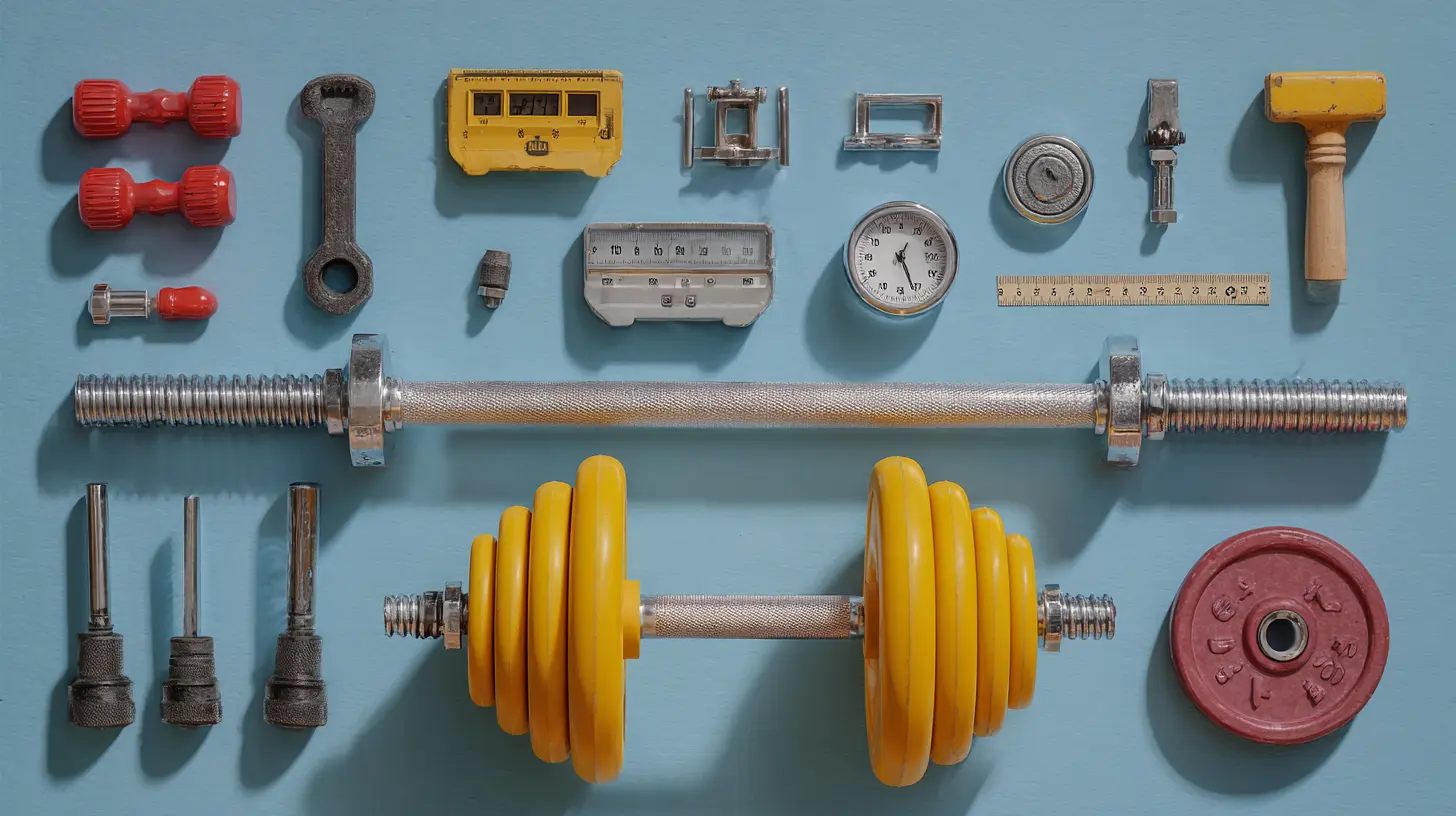
The Three Pillars of Modern Maintenance
You cannot buy your way out of maintenance. You have to build a system. Every effective maintenance program in 2027 rests on three pillars that support each other. Remove one, and the structure tilts.Pillar One: Condition Awareness
Condition awareness means you know the actual state of your asset at any given time. This is not the same as having a maintenance schedule. A schedule assumes the asset degrades at a predictable rate. Condition awareness accepts that degradation is variable and depends on load, temperature, operator skill, material quality, and a dozen other factors.The simplest form of condition awareness is a well-trained human who walks the floor, listens for unusual sounds, feels for vibration, and checks fluid levels. That still works, and it works well. But in 2027, the human is augmented by sensors that measure vibration, temperature, acoustic emissions, oil particle count, and electrical signature.
The mistake many organizations make is buying sensors without a clear question in mind. They install vibration monitors on every motor, then generate so much data that nobody knows what to do with it. The sensor becomes a source of anxiety, not insight.
The right approach is to start with a specific failure mode. Ask yourself: what is the most likely way this asset will fail, and what measurable parameter changes before that failure occurs? If you have a bearing that tends to overheat, monitor temperature. If you have a gearbox that sheds metal particles, monitor oil debris. If you have a pump that cavitates, monitor pressure and flow. One sensor answering one critical question is worth more than fifty sensors generating noise.
Pillar Two: Predictive Decision-Making
Once you have condition data, you need a framework for acting on it. This is where predictive maintenance diverges from condition monitoring. Condition monitoring tells you something is changing. Predictive maintenance tells you what is likely to happen next, and when.The 2027 toolset for this includes statistical models, machine learning algorithms, and simple trend analysis. You do not need a data science team to benefit from this. A basic rule like "replace the filter when differential pressure exceeds 8 psi, and we know from history that this happens after roughly 400 operating hours" is a predictive model. It is not fancy, but it works.
The more sophisticated approaches use multiple data streams to forecast remaining useful life. For example, a conveyor motor might show a slight temperature rise that correlates with increased bearing wear. Alone, the temperature rise is within normal range. But when combined with a vibration spike at a specific frequency, the model flags a high probability of failure within 200 hours. That gives you time to plan the replacement during a scheduled shutdown, rather than reacting to a mid-shift breakdown.
The common mistake here is overconfidence in the model. Predictive models are probabilistic, not certain. They give you a risk score, not a guarantee. The best practitioners treat the model as an advisor who is usually right but sometimes wrong. They still do visual inspections. They still listen to the machine. They still respect the operator who has run the same line for ten years and says something feels off.
Pillar Three: Execution Logistics
You can predict a failure perfectly, but if you cannot get the part, the technician, and the shutdown window aligned, the prediction is useless. Execution logistics is the unglamorous but critical work of having the right spare parts in stock, the right skills on call, and the right access to the asset.In 2027, supply chains are still recovering from the shocks of the previous decade. Lead times for bearings, motors, and electronic components are longer than they were in 2019. This changes the calculus of spare parts inventory. The old just-in-time approach, where you order a part after you confirm a failure, is risky for critical assets. You may be waiting six weeks for a part that needs to be installed in three days.
The solution is a tiered spare parts strategy. For every critical asset, you classify components into three tiers. Tier one is cheap, fast-wearing items that you always keep in stock. Tier two is expensive but long-lead items that you keep for assets where downtime cost is astronomical. Tier three is everything else, which you source on demand and accept the risk.
The trade-off is between carrying cost and downtime cost. Carrying a five-thousand-dollar motor on the shelf for three years is annoying. But if that motor is the only one keeping your production line alive, and the alternative is a seven-day shutdown that costs fifty thousand dollars a day, the shelf is the cheapest insurance you will ever buy.

The Human Element: Why Technicians Are Still the Core
There is a persistent myth that automation and AI will make maintenance technicians obsolete. The opposite is true. In 2027, the technician is more valuable than ever, but the role has changed.A technician in 2027 does not just turn wrenches. They interpret data, verify sensor readings, and make judgment calls about whether to run an asset longer or take it down early. They are the bridge between the digital model and the physical reality. The machine learning algorithm can flag an anomaly, but only a human can look at the bearing housing, see the slight discoloration, and remember that this particular machine had a misalignment issue after the last rebuild.
The problem is that the workforce is aging, and the pipeline of new technicians is thin. Fewer young people are entering the trades. This is not a problem you can solve with a software subscription. It requires a deliberate investment in training, apprenticeship, and career pathing.
If you are running a maintenance operation, your most important maintenance task is maintaining your people. That means cross-training so that no single person is the only one who knows how to fix a critical asset. It means documenting tribal knowledge before the senior technician retires. It means creating a culture where asking for help is not seen as weakness, and where stopping a machine to investigate a small issue is celebrated, not punished.
The best maintenance organizations treat their technicians like diagnosticians, not replaceable parts. They give them time to think, tools to analyze, and authority to make decisions. The worst organizations treat them as order-takers who must wait for approval before acting. The difference in outcomes is dramatic.

The Cost of Doing Nothing: A Realistic Look
Maintenance is often seen as a cost center. Finance managers look at the budget and see money going out with no direct revenue attached. That perspective leads to the classic mistake of deferring maintenance to save money this quarter, only to pay triple next quarter.Let us walk through a realistic example. Consider a commercial chiller that cools a data center. The manufacturer recommends replacing the condenser coils every five years. The cost is forty thousand dollars. The finance team decides to defer this for two years to improve the annual report.
In year six, the chiller loses efficiency. It now runs longer to achieve the same cooling, increasing electricity costs by fifteen percent. That is an extra eighteen thousand dollars per year in energy. In year seven, a coil leaks, and the refrigerant charge escapes. The repair costs twenty-five thousand dollars, plus the cost of the refrigerant, which has become expensive due to environmental regulations. During the repair, the chiller is down for three days. The data center has to throttle computing load, and the business loses an estimated two hundred thousand dollars in missed service-level agreements.
The total cost of deferring a forty-thousand-dollar job was over two hundred and fifty thousand dollars. This is not an unusual story. It is the standard story. Deferred maintenance rarely saves money. It shifts costs into the future with interest.
The counterargument is that not all maintenance is worth doing. Some assets are cheap enough to replace, and some failures are inconsequential. The skill is in distinguishing between a critical asset where prevention is always cheaper, and a non-critical asset where a reactive approach is rational.
A practical rule: if the asset can fail without affecting safety, production, or customer delivery, and the cost of replacement is less than half the cost of a planned maintenance program over the same period, let it run to failure. Apply your maintenance dollars where they have the highest leverage.
The Role of Documentation and Data Hygiene
You cannot predict what you do not measure, and you cannot measure what you do not record. The most common failure in maintenance programs is not technical. It is administrative. Work orders are incomplete. Asset histories are scattered across spreadsheets and paper logs. The same failure happens twice because nobody looked at the notes from the first time.In 2027, a computerized maintenance management system, or CMMS, is the baseline. There are options for every budget, from open-source tools to enterprise platforms. But the software is not the solution. The discipline is.
Every work order should capture the following: the asset identifier, the symptom reported, the probable cause, the actual cause, the repair performed, the parts used, the labor hours, and the downtime duration. This data becomes the foundation for future decisions. Without it, you are guessing.
The mistake is treating data entry as a bureaucratic burden rather than a strategic asset. Yes, it takes five extra minutes per job. But over time, that data tells you which assets are reliable, which technicians are most effective, which parts fail prematurely, and which maintenance intervals are too long or too short.
One practical tip: conduct a quarterly review of your maintenance data. Look for patterns. Is one asset consuming a disproportionate share of your budget? Is a particular failure mode appearing on multiple assets that share the same component? These patterns point to systemic issues, such as poor installation quality, a bad batch of parts, or an environmental factor like excessive humidity or dust.
The Controversy of Predictive Maintenance Hype
There is a lot of money being made selling predictive maintenance solutions. Vendors promise that their AI platform will reduce downtime by fifty percent and extend asset life by thirty percent. Some of these claims are true, but they come with caveats.The first caveat is data maturity. Predictive models require historical failure data to train on. If you have been running your assets for ten years without collecting reliable data, you have no baseline. The model will be guessing. You cannot skip the step of building a data history.
The second caveat is the false positive problem. A model that flags fifty potential failures per week, when only five are real, creates alarm fatigue. Technicians start ignoring the alerts, and then a real failure slips through. The cost of this is not just the failure itself, but the loss of trust in the system.
The third caveat is the maintenance window problem. Even if the model perfectly predicts a failure in 300 hours, you still need a shutdown window to fix it. In a 24/7 operation, that window may not exist. The model tells you the risk, but it does not tell you how to solve the scheduling conflict.
The pragmatic approach is to start small. Pick one asset class where failures are expensive and predictable. Install sensors, collect data for six months, and build a simple trend model. Prove the value on a small scale, then expand. Do not try to digitize your entire plant in one quarter.
Maintenance in Different Contexts: What Changes, What Does Not
The principles of maintenance are universal, but the application varies by context. Consider three different settings.Industrial Manufacturing
In a factory, maintenance is directly tied to production output. The key metric is overall equipment effectiveness, or OEE, which combines availability, performance, and quality. A machine that runs all the time but produces defective parts is not healthy. A machine that produces perfect parts but is down every other day is not healthy either.The best factories integrate maintenance with production scheduling. They do not see maintenance as an interruption to production. They see production as an interruption to maintenance. This mindset shift is subtle but profound. It means that the maintenance window is sacred, and production must adapt to it, not the other way around.
Commercial Real Estate and Facilities
For a building, maintenance is about occupant comfort, safety, and compliance. The critical systems are HVAC, elevators, fire suppression, and electrical distribution. Failures here do not stop a production line, but they do create tenant dissatisfaction, regulatory fines, and liability risks.The trend in 2027 is toward performance-based maintenance contracts. Instead of paying a vendor per service call, you pay a fixed monthly fee, and the vendor is responsible for keeping the system within agreed performance parameters. This aligns incentives. The vendor wants to prevent failures because failures cost them money. The building owner gets predictable costs and better uptime.
The risk is that the vendor cuts corners on inspections or uses cheap parts to inflate margins. The owner must maintain oversight, review the vendor's data, and conduct spot checks.
Personal Property and Fleet Vehicles
For individuals who own cars, boats, or other equipment, the maintenance game is simpler but still requires discipline. The 2027 vehicle is more complex than ever, with hybrid powertrains, advanced driver assistance systems, and software that updates over the air. The old advice of changing oil every three thousand miles is obsolete. Modern vehicles have condition-based service intervals that depend on driving style and environment.The biggest mistake individuals make is ignoring the dashboard warning lights. In 2027, a warning light is not a suggestion. It is the result of a diagnostic algorithm that has detected an actual or impending fault. Driving with the check engine light on is like ignoring a fever. You can do it for a while, but the underlying infection will not resolve itself.
The practical advice is to follow the owner's manual, but also to listen to the vehicle. If you notice a new vibration, a different sound, or a change in fuel economy, do not wait for the scheduled service. Investigate early. The cost of an early diagnosis is almost always less than the cost of a late one.
The Hidden Cost of Poor Maintenance: Safety and Liability
It is easy to focus on the financial costs of poor maintenance, but the human cost is more severe. A poorly maintained machine can injure or kill a worker. A poorly maintained building can expose occupants to mold, poor air quality, or fire hazards. A poorly maintained vehicle can cause a crash.Regulators are paying closer attention to maintenance records. In heavily regulated industries like aviation, food processing, and healthcare, maintenance is not optional. It is a legal requirement with audits, certifications, and severe penalties for non-compliance.
The best way to think about maintenance is not as an expense, but as a form of insurance. You pay a predictable, manageable amount now to avoid the risk of an unpredictable, catastrophic event later. Like all insurance, you hope you never need it. But unlike insurance, maintenance has a guaranteed return. Every inspection you perform, every part you replace on time, every data point you record is reducing the probability of a bad outcome.
Building a Maintenance Culture That Lasts
A maintenance strategy is only as good as the culture that supports it. You can buy the best software, hire the best technicians, and install the best sensors, but if the organization sees maintenance as a necessary evil, the program will fail.The culture starts at the top. Leaders must talk about maintenance as a value-creating activity, not a cost to be minimized. They must give the maintenance team a seat at the table when production schedules are set. They must be willing to accept short-term downtime for long-term reliability.
The culture also requires psychological safety. A technician who is afraid to report a potential problem because they will be blamed for the downtime is a liability. The organization must reward early reporting and treat failures as learning opportunities, not punishable offenses.
Finally, the culture requires patience. Maintenance improvements take time to show results. You will not eliminate all failures in a year. You will not see the full return on your sensor investment in six months. But if you stay consistent, the trend will be clear. Downtime will decrease. Repair costs will drop. Asset life will extend. And the organization will wonder how it ever operated any other way.
The guide to maintenance in 2027 is not about a specific tool or technique. It is about a mindset of stewardship. You are not just keeping machines running. You are protecting the people who use them, the customers who depend on them, and the financial health of the organization that owns them. That is a responsibility worth taking seriously.
all images in this post were generated using AI tools
Category:
Weight MaintenanceAuthor:

Angelo McGillivray
Discussion
rate this article
1 comments
Zinnia Reyes
Great insights in this guide! Proper maintenance is key to staying healthy in 2027. Let's embrace these tips and take charge of our well-being. Small changes can lead to big results!
September 17, 2026 at 5:02 PM